
Pattern Support: How to Get Help from a Knitting Designer, and What to Do If You Can’t
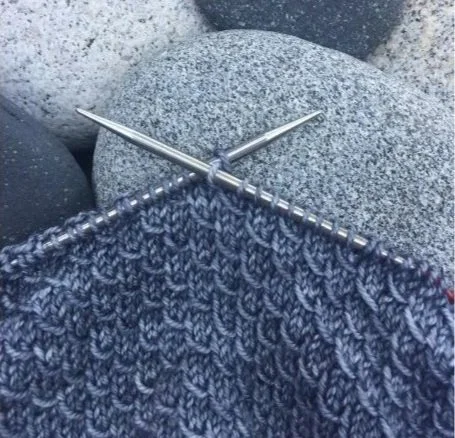
Even experienced knitters get stuck sometimes:
Your stitch count is off any you can’t figure out why, no matter how many times you go back and forth; there’s an abbreviation you’ve never seen before and no definition given for it; or maybe you spot a math error that causes you to stop knitting, unsure what the numbers are supposed to be.
So, what to do?
a. Fume for a while, then eat some ice cream
b. Rant to your best friend, who doesn’t knit but will listen to you any time
c. Take to social media to vent your frustrations
d. Glare at the project angrily, then frog the whole thing
e. Get pattern support.
Options A through D might be satisfying temporarily, but what you really want is to get back to knitting. So let’s take a closer look at pattern support. That’s the official knitting term for “asking for help.” It’s sounds a little cold, but the underlying idea is warm: When you buy a knitting pattern, the designer wants you to be happy with it. Asking questions about a pattern isn’t “extra” - it’s part of the process. This post will tell you how to get pattern support when you need it, and what to do if you can’t.
How to contact the pattern designer
Most pattern designers want to hear from a knitter who is having trouble with one of their patterns. Helping knitters find success is actually one of the best parts of being a designer! And if there’s an error in the pattern, responsible designers want to remedy the mistake as soon as possible. Personally, I’ve always been appreciative of knitters who reach out with questions or suspect they’ve found a mistake. So don’t be shy about reaching out.
You may find the designer’s contact information in different places:
within the pattern
on their website
on their Ravelry designer page, which you can find by searching their actual name or Ravelry handle; go to the “community” tab and then to “people.”
on the purchase confirmation email
Some designers don’t provide an email address, just a contact form on their website. These are often monitored less frequently than direct emails. But if you don’t find the designer’s email anywhere, give the contact form a try.
If you reach out by email or contact form and don’t get a response within a day or so, you can try using Ravelry messages or direct messaging the designer through Facebook or Instagram.
What makes a successful request for support
Make sure to include:
pattern name
page number + row or round that’s giving you trouble
what the trouble is
what you have done so far to figure things out
a photo of the work, if that would be useful
The more information you can provide initially, the less back and forth you’ll have to have to solve the problem. For example: "I'm working on the sleeve and I'm confused by the instruction on page 6, beginning with Round 12. I have 64 stitches, but the next instruction seems to require 68. Could you help me figure out where I've gone off track?" That’s a lot easier to troubleshoot than “The sleeve doesn’t work.”
What you can do while you’re waiting for a reply - or if you don’t get one
Ravelry pattern pages and comment pages can be a tremendous source of information when you’re stumped by a pattern. If something is wrong with a pattern, knitters will often have commented on it - and often figured out how to resolve the problem or work around it. But even if you find solutions in other knitters’ project notes, the designer may have a different approach; it’s still worth reaching out to get the designer’s perspective. Asking questions also gives the designer a chance to refine the pattern, improve pattern clarity, or fix mistakes. Future knitters will appreciate the pattern improvements that result from your questions!
If you’re working on a pattern from a book or printed pamphlet, check online to see if there are published errata.
Still coming up empty? Your local library or knitting guild may have experienced knitters who will happily do some pattern detective work to help figure out the problem.
The hive mind on social media : pluses and minuses
In today’s world, social media is often the go-to for sharing our frustrations and seeking help. And if you’ve found what looks like an error in a pattern, you may understandably want to warn other knitters - and share your annoyance at having your knitting come to a halt.
But before posting that a pattern is wrong, give the designer the first opportunity to figure out the problem. Once something is posted publicly, the original question and eventual answer don’t always travel together. Even if the designer then responds and addresses the concern, a critical post can linger and give a more widespread negative impression that might not be deserved. A pattern problem doesn’t always mean a bad pattern, and a designer who doesn’t respond immediately doesn’t always mean a designer who doesn’t care.
Still, if you’ve tried reaching out to the pattern designer, waited a reasonable period of time, tried a secondary means of contact like Rav messages or social media DM and still haven’t heard back, the larger knitting community for help. Facebook does have a number of knitting groups that might be able to work through the problem with you, whether it’s an error in the pattern, phrasing that’s not clear to you, or if you’ve made a mistake that another knitter can figure out.
…So don’t hesitate !
If you run into a problem or question when knitting, you don’t have to fume or despair. Reach out and get the help you need - and deserve! - and get back to the knitting you love.